
KVS NVS Mock Interviews: How to Practise Before the Tier 3 Interview
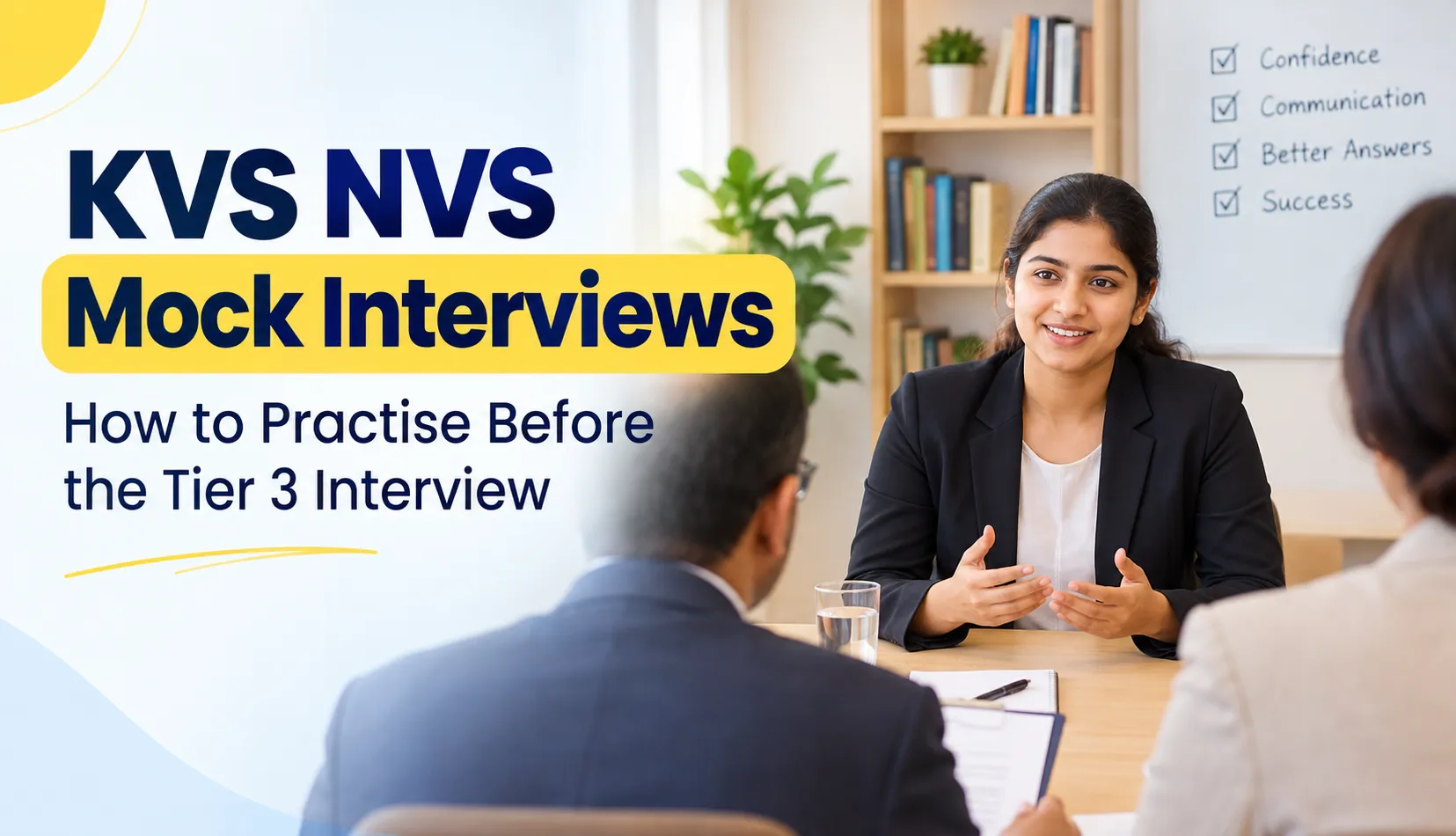
Clearing the written stages is an important achievement, but the interview can bring a different kind of challenge. Candidates need to communicate clearly, answer questions with confidence, and show that they understand their teaching role.
This is where KVS NVS Mock Interviews can make a real difference. A mock interview gives you a chance to practise before facing the actual panel. It helps you understand how you speak, how you organise your answers, and how you respond when someone asks an unexpected question.
For KVS and NVS aspirants, regular practice can also reduce interview anxiety. Instead of preparing answers only by reading them, candidates can practise speaking them aloud and improve their delivery.
Why Mock Interviews Matter for KVS NVS Preparation
Many candidates prepare well for written examinations but feel uncomfortable during interviews. They may know the answer but struggle to explain it clearly.
A mock interview creates a realistic practice environment.
You Learn to Answer Under Pressure
An interview is different from studying at home. A panel may ask a question in a different way from what you expected.
Mock practice helps you stay calm and think before answering.
You learn to:
- Listen to the complete question
- Take a short pause before answering
- Organise your thoughts
- Speak clearly
- Avoid unnecessary details
- Handle follow-up questions
You Improve Your Communication
Teaching jobs require clear communication. Your interview gives you an opportunity to show how effectively you can explain ideas.
During KVS NVS Mock Interviews, focus on your voice, speed, clarity, and confidence.
Do not try to use difficult English just to impress the panel. Simple and correct language often makes your answer easier to understand.
How to Practise Before the Tier 3 Interview
Good practice does not mean answering hundreds of questions without reviewing your performance. You need a structured approach.
Start With Your Introduction
The first question is often related to your background. Prepare a short introduction that covers your education, experience, subject, skills, and teaching interest.
Keep your introduction natural.
Avoid memorising every sentence. Instead, remember the important points you want to discuss.
For example, your introduction can include:
- Your name
- Educational qualification
- Relevant teaching experience
- Subject or post
- Important skills
- Reason for choosing teaching
Practise your introduction several times until you can deliver it comfortably.
Practise Subject-Based Questions
Your subject knowledge remains important during interview preparation.
Take your main subject and prepare questions from:
- Basic concepts
- Important definitions
- Classroom applications
- Common student doubts
- Current teaching approaches
- Practical examples
Do not focus only on advanced questions. Interviewers can also ask simple questions to check whether your fundamentals are clear.
Practise Teaching-Based Questions
Candidates should also prepare for questions about classroom situations.
For example, you may practise how you would respond if:
- A student does not understand a topic
- A student repeatedly disturbs the class
- Students have different learning levels
- A child lacks confidence
- A parent raises a concern
- Students lose interest during a lesson
The best way to practise these questions is to think like a teacher.
Explain what you would do, why you would do it, and how your approach would help the student.
Create a Realistic Mock Interview Environment
One common mistake is practising while sitting comfortably alone and simply reading answers.
Try to make the practice closer to a real interview.
Sit Properly and Maintain Eye Contact
Ask a friend, teacher, mentor, or family member to act as the interviewer.
Sit upright and maintain natural eye contact.
Do not stare continuously at one person. If you are practising with a panel, address different members naturally while answering.
Follow a Time Limit
Give yourself a fixed time for the mock interview.
This helps you understand whether your answers are too long or too short.
A good answer should provide enough information without moving away from the question.
Add Unexpected Questions
Do not practise only questions that you already know.
Ask your practice partner to include a few unexpected questions. This will help you develop the ability to think instead of depending completely on memorised answers.
Record Your Mock Interviews
Recording your practice can help you notice things that you may not notice while speaking.
After every KVS NVS Mock Interviews session, watch or listen to your recording.
Look for simple improvements.
Check Your Speaking Style
Ask yourself:
- Am I speaking too quickly?
- Am I using too many filler words?
- Am I giving very long answers?
- Is my voice clear?
- Do I sound confident?
- Am I repeating the same points?
You do not need to change everything at once. Pick two or three areas and work on them during your next practice session.
Check Your Body Language
Your body language also communicates confidence.
Watch whether you:
- Sit comfortably
- Keep your hands under control
- Maintain natural eye contact
- Avoid unnecessary movements
- Smile when appropriate
- Listen carefully
Good body language should look natural. Do not force a particular pose.
Practise Common Interview Areas
A strong mock interview should cover different parts of your profile.
Personal Background
Prepare questions about your education, experience, interests, strengths, and career goals.
Be honest. If the panel asks a follow-up question, a genuine answer is easier to explain than a memorised response.
Teaching Methodology
Prepare questions about lesson planning, classroom management, assessment, student engagement, and learning difficulties.
Think about how you would apply your knowledge in an actual classroom.
KVS and NVS Awareness
Learn about the organisation, its educational environment, and the role for which you have applied.
Do not limit your preparation to basic facts. Understand why the role matters and what responsibilities come with it.
Also check official recruitment updates before the interview because recruitment notices and candidate instructions can change. KVS maintains an official recruitment and interview notice section for such updates.
Current Educational Topics
Keep yourself updated about important developments in Indian education.
You can revise topics such as:
- NEP-related educational changes
- Digital learning
- Inclusive education
- Skill-based learning
- Student assessment
- Technology in classrooms
- Teacher responsibilities
The goal is not to memorise news. Understand the topic and form a clear, balanced view.
Learn From Every Mock Interview
The biggest benefit of mock practice comes from feedback.
After each session, write down three things:
What went well?
Maybe your subject knowledge was strong or your introduction was clear.
What needs improvement?
Perhaps you spoke too quickly or gave long answers.
What will you change next time?
Choose a specific action.
For example:
“Next time, I will answer in three clear points.”
This approach makes every practice session more useful.
Common Mistakes to Avoid During Mock Interviews
Mock interviews work best when candidates use them correctly.
Do Not Memorise Every Answer
Memorising complete answers can make your speech sound unnatural.
Prepare key points instead.
Do Not Give Extremely Long Answers
Answer the question directly. Add an example when it helps.
If the interviewer wants more information, they can ask a follow-up question.
Do Not Ignore Your Weak Areas
Some candidates keep practising questions they already know.
Spend more time on areas where you hesitate or struggle.
Do Not Treat Feedback Personally
Feedback is meant to improve your performance.
Use it as a tool. If someone says your answer lacks structure, practise giving answers with a clear beginning, main point, and conclusion.
A Simple 7-Day Mock Interview Practice Plan
You can follow a simple weekly plan before your interview.
Day 1: Personal Introduction
Practise your introduction, education, experience, strengths, and career goals.
Day 2: Subject Knowledge
Revise important concepts and practise explaining them aloud.
Day 3: Teaching Questions
Practise classroom management, lesson planning, assessment, and student-related situations.
Day 4: KVS and NVS Awareness
Revise important information about the organisations and the role you have applied for.
Day 5: Full Mock Interview
Complete one interview without stopping to check notes.
Day 6: Review and Improve
Watch your recording and work on your weak areas.
Day 7: Final Practice
Take one more full mock interview. Focus on calm communication, clear answers, and confident body language.
How VyasaIAS Can Help With Interview Preparation
Interview preparation becomes more useful when you receive structured practice and feedback.
A focused mock interview can help you understand where your answers need improvement. It can also help you practise handling follow-up questions and different interview situations.
Candidates preparing for KVS and NVS interviews can use mock sessions to improve subject knowledge, communication, classroom-related answers, and overall presentation.
Prepare With Focused Practice
If you are looking for structured support, KVS NVS mock interview questions can help you understand the types of areas you should practise before the interview. Combine question practice with realistic mock sessions and feedback to build a more confident approach.
Final Thoughts
The KVS NVS Tier 3 interview is not only about knowing the right answer. It is also about explaining your thoughts clearly and showing that you can handle classroom responsibilities.
Regular practice can make the process more comfortable. Start with your introduction, revise your subject, practise teaching situations, record your answers, and learn from every mock session.
Most importantly, stay genuine. You do not need to sound perfect. You need to communicate clearly, stay composed, and show your understanding of the teaching profession.
With consistent preparation and the right guidance from VyasaIAS, candidates can approach their KVS NVS interview preparation with greater clarity and confidence.