
KVS NVS Interview Questions 2026: What Can Candidates Expect From the Panel?
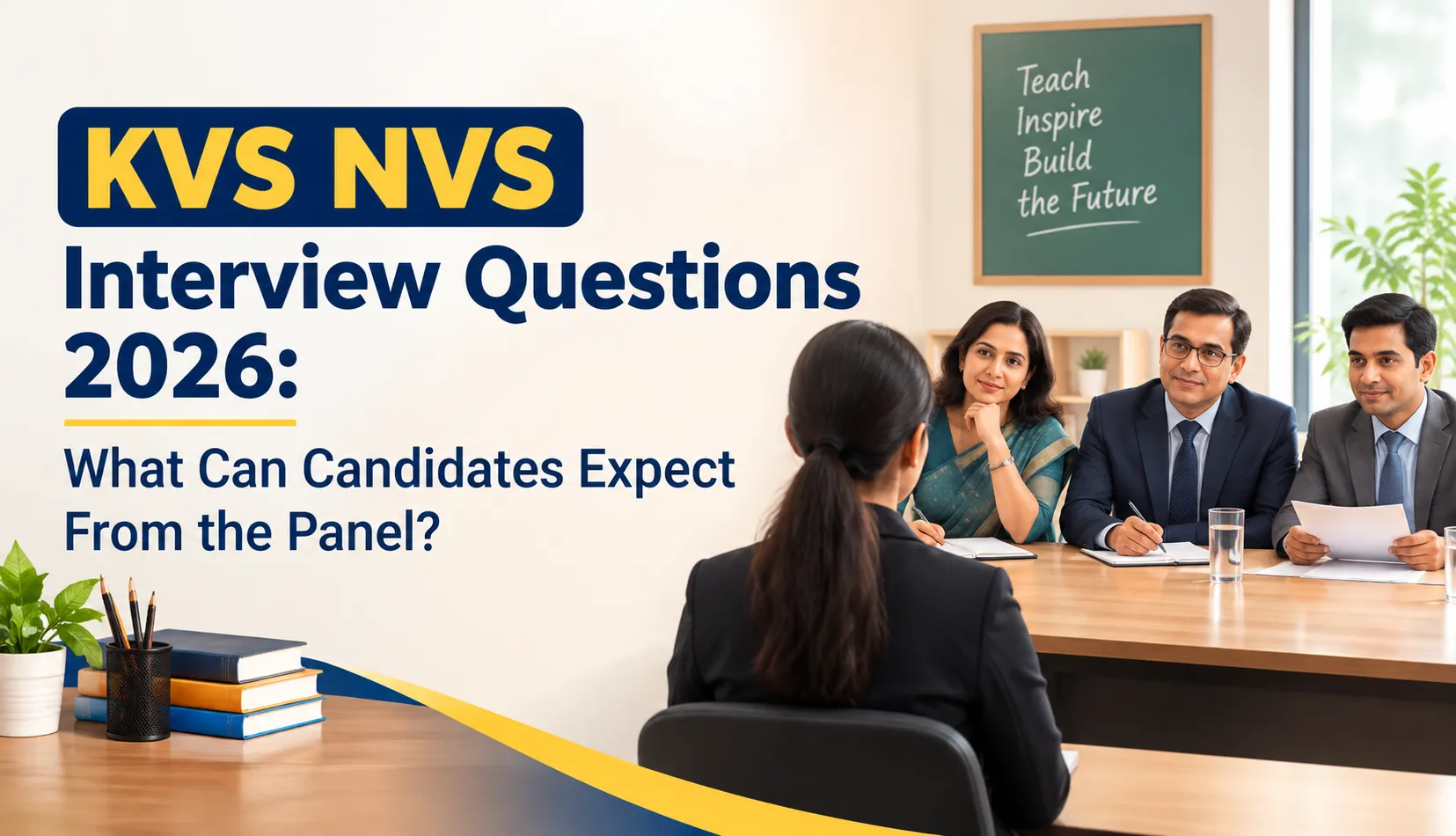
Clearing the written examination is an important step for candidates preparing for teaching jobs under Kendriya Vidyalaya Sangathan (KVS) and Navodaya Vidyalaya Samiti (NVS). However, candidates who reach the interview stage need to prepare for a different kind of assessment.
The interview gives the panel an opportunity to understand more than a candidate’s academic knowledge. The panel may want to know how well a candidate understands teaching, students, classroom situations, subject concepts, and the responsibilities of a teacher.
KVS recruitment information explains that candidates may be shortlisted for an interview or skill test after the written or computer-based examination, depending on the recruitment process, available vacancies and cut-off requirements.
For 2026 aspirants, preparation should therefore cover both subject knowledge and practical teaching situations. This is where KVS NVS Mock Interviews can help candidates practise answering questions in a structured and confident way.
What Can Candidates Expect From the KVS NVS Interview?
The exact questions asked in an interview can vary according to the post, subject, candidate profile and panel. Candidates should not expect every interview to follow the same pattern.
However, the panel can generally explore areas such as:
- Personal introduction
- Academic background
- Teaching experience
- Subject knowledge
- Teaching methods
- Classroom management
- Child psychology
- Current education-related developments
- Knowledge of KVS or NVS
- Situational and practical questions
- Communication and presentation skills
Candidates should focus on understanding these areas instead of memorising a fixed list of answers.
1. Questions About Your Introduction
The interview may begin with simple questions about the candidate.
Possible Questions
- Tell us about yourself.
- What is your educational qualification?
- Why did you choose teaching as a career?
- What are your strengths as a teacher?
- Do you have previous teaching experience?
- Why do you want to join KVS or NVS?
These questions may sound easy, but they can set the tone for the interview.
Prepare a short introduction that covers your education, relevant experience, subject expertise and interest in teaching. Avoid giving unnecessary personal information.
Your answer should sound natural rather than memorised.
2. Questions About Your Subject
Subject knowledge remains an important part of teacher recruitment preparation.
A panel may ask basic, intermediate or application-based questions from the subject related to the post. The questions may test whether you can explain concepts clearly rather than simply remember textbook definitions.
For example, a candidate may be asked:
- How would you explain this topic to Class VI students?
- What is the difference between these two concepts?
- Why is this topic important?
- Can you give a practical example?
- How would you teach this difficult concept?
This is why candidates should revise their subject fundamentals carefully.
Do not prepare only advanced topics. Basic concepts can also become important during an interview because teachers need to explain fundamentals to students.
3. Teaching Methodology Questions
The panel may also want to understand how you approach teaching.
Questions May Include:
- How would you plan a lesson?
- What makes a good lesson plan?
- How do you make a difficult topic interesting?
- How would you encourage student participation?
- How do you check whether students understand a topic?
- How would you use teaching aids in the classroom?
Candidates should understand different teaching approaches and know when to use them.
A good answer should connect teaching methods with the needs of students. Instead of saying that one method is always the best, explain how you would select a method according to the topic, class level and learning needs.
4. Classroom Management Questions
Classroom situations are another area candidates should prepare.
The panel may present a situation and ask what you would do.
For example:
What Would You Do If a Student Keeps Disturbing the Class?
A good response should show patience and practical thinking. A teacher should first try to understand why the student is behaving that way. The teacher can then communicate with the student, set clear expectations and use suitable classroom strategies.
What If Two Students Start Arguing?
The teacher should handle the situation calmly, separate the immediate issue from the larger discussion and listen to both students. The response should focus on maintaining a safe and respectful classroom environment.
How Would You Help a Weak Student?
You can explain that you would identify the learning gap, provide additional support, use simpler explanations and regularly monitor progress.
These questions test how candidates may respond to real classroom situations.
5. Questions on Child-Centred Teaching
Modern teaching focuses strongly on student participation and learning needs.
Candidates may be asked:
- How do you motivate students?
- How would you support different learning levels?
- How can activities improve learning?
- How would you encourage a shy student?
- How do you identify a student’s learning difficulty?
The panel may expect practical answers instead of only theoretical definitions.
Try to explain how you would make students active participants in the learning process.
6. Questions About KVS and NVS
Candidates should also research the organisations before appearing for the interview.
KVS recruitment is centrally organised for direct recruitment, and its official recruitment information describes the process of shortlisting candidates for interview or skill tests based on the relevant examination and vacancies.
Candidates should understand the basic purpose and working environment of KVS and NVS.
Questions May Include:
- Why do you want to join KVS?
- What do you know about KVS?
- What do you know about NVS?
- What attracts you to a residential school environment?
- How can you contribute to the institution?
- What responsibilities does a teacher have beyond classroom teaching?
Do not give overly long answers. Show that you have researched the organisation and understand the responsibilities connected with the post.
7. Questions Based on Your Resume or Experience
If you have teaching experience, the panel may ask about your previous work.
For example:
- Which classes have you taught?
- Which teaching methods have you used?
- What was your biggest classroom challenge?
- How did you handle a difficult student?
- How did you measure student progress?
- What did you learn from your teaching experience?
Be honest while answering.
If you mention a particular teaching method, project or achievement in your application, be prepared to explain it properly.
8. Situational Questions Candidates Should Practise
Situational questions can be challenging because there may not be one fixed answer.
Candidates can practise questions such as:
If Most Students Do Not Understand Your Lesson, What Will You Do?
You can explain that you would identify the difficult part, change your explanation, use examples or teaching aids and check understanding again.
If Parents Complain About a Student’s Performance, How Will You Respond?
A balanced answer can focus on communication, understanding the student’s learning needs and working with parents to support improvement.
If Students Have Different Learning Levels, How Will You Teach Them?
Explain how you would use differentiated activities, additional support and regular assessment.
Practising such situations through KVS NVS Mock Interviews can help candidates organise their thoughts before the actual interview.
How Can Candidates Prepare for the 2026 Interview?
Interview preparation should start with a clear study plan.
Revise Your Subject Basics
Go through important concepts from your subject. Pay special attention to topics that you may need to explain at school level.
Review Teaching Concepts
Revise lesson planning, classroom management, assessment, child development and teaching strategies.
Prepare Your Introduction
Keep your introduction short and relevant. Practise it until you can deliver it naturally without sounding rehearsed.
Follow Education-Related Updates
Keep yourself aware of major developments in school education, teaching practices and relevant government education initiatives.
Practise Speaking Clearly
Knowledge alone is not enough. You should also be able to explain your ideas clearly.
Regular KVS NVS Mock Interviews can help you practise this skill and identify areas where your answers need improvement.
Common Mistakes to Avoid in the Interview
Candidates can lose confidence because of small mistakes. Keep these points in mind:
- Do not memorise every answer word-for-word.
- Do not give extremely long answers.
- Do not guess if you genuinely do not know something.
- Do not argue with the panel.
- Do not ignore basic subject concepts.
- Do not speak too quickly.
- Do not use unnecessary complicated language.
- Do not give examples that you cannot explain further.
The aim should be to have a calm and meaningful conversation with the panel.
How Mock Interviews Can Improve Preparation
Reading questions is useful, but answering them aloud is a different experience.
KVS NVS Mock Interviews allow candidates to practise under interview-like conditions. They can help candidates understand how to structure an answer, manage nervousness and respond to unexpected questions.
Mock interviews can also reveal problems that candidates may not notice while studying alone. For example, you may know the answer but struggle to explain it clearly. Practice can help improve this.
Candidates should use mock interviews as a preparation tool, not as a way to memorise fixed answers.
Prepare With the Right Interview Practice
The KVS and NVS interview stage requires more than textbook preparation. Candidates should combine subject revision, teaching methodology, classroom situations and communication practice.
If you are preparing for the 2026 interview, practise different question types and work on giving clear, confident and relevant answers. Reviewing KVS NVS expected questions can also help you identify important areas to practise before the interview.
With regular KVS NVS Mock Interviews, candidates can become more comfortable with the interview environment and improve their ability to respond naturally.
Final Thought
A good interview is not about giving the longest answer. It is about showing that you understand your subject, care about students and can handle classroom responsibilities with maturity.
Candidates preparing for KVS and NVS should focus on genuine preparation instead of trying to predict every question. Build strong subject knowledge, understand teaching practices, practise common situations and improve your communication.
With consistent practice and the right guidance, you can approach the interview stage with greater clarity and confidence. VyasaIAS can support aspirants in building a structured preparation approach for competitive teaching examinations and interviews.