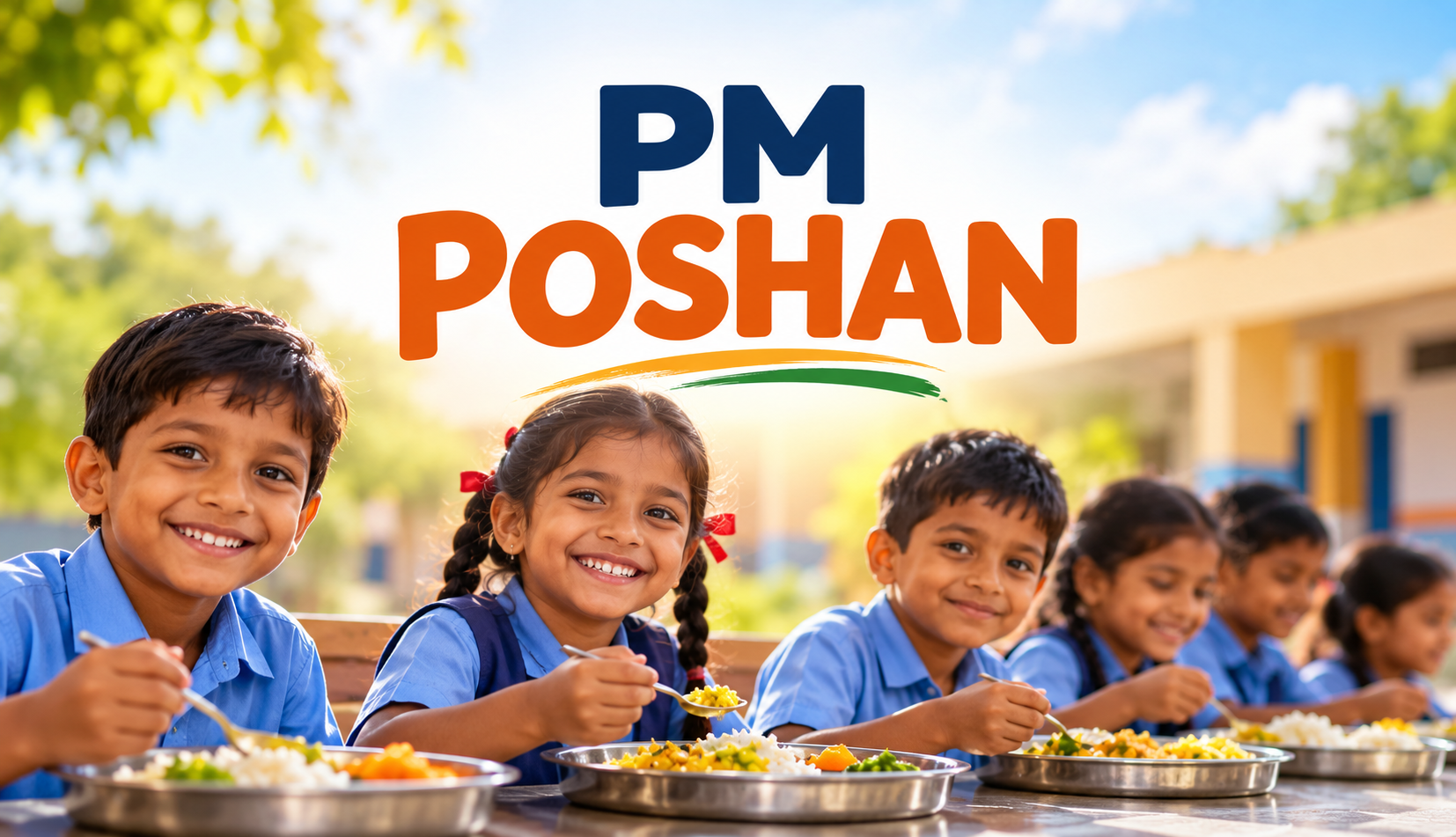
Introduction to PM POSHAN
The Pradhan Mantri Poshan Shakti Nirman (PM POSHAN) Scheme is a Government of India initiative designed to improve children’s nutritional status and encourage regular school attendance. Previously known as the Mid-Day Meal Scheme, it provides one hot, cooked meal to eligible children studying in government and government-aided schools on school working days.
The scheme is implemented by the Ministry of Education and aims to address two important challenges: classroom hunger and barriers to education. By providing nutritious meals, PM POSHAN helps children receive essential nutrients, participate regularly in school and concentrate better on their studies.
The programme also promotes healthy eating habits, social equality and community participation in school nutrition.
Objectives of the PM POSHAN Scheme
The main objective of PM POSHAN is to support children’s nutritional needs while improving their participation in education.
Its key objectives include:
-
Improving Nutrition: Provide nutritious meals to eligible children to support healthy growth and development.
-
Reducing Classroom Hunger: Help children learn without being distracted by hunger during school hours.
-
Improving School Attendance: Encourage children, particularly those from economically disadvantaged families, to attend school regularly.
-
Supporting Learning: Help children concentrate on classroom activities and participate more actively in lessons.
-
Promoting Social Equality: Encourage children from different social and economic backgrounds to sit together and share meals.
-
Supporting Vulnerable Children: Provide nutritional support during difficult circumstances, as permitted under the scheme’s guidelines.
Eligibility for PM POSHAN
PM POSHAN primarily covers children enrolled in eligible educational institutions.
The main beneficiaries include:
-
Bal Vatika: Eligible children attending pre-primary classes in government and government-aided primary schools.
-
Classes I to V: Children studying in primary classes in government and government-aided schools.
-
Classes VI to VIII: Children studying in upper-primary classes in government and government-aided schools.
Eligible children receive one hot, cooked meal on school working days under the scheme. The programme aims to provide support without discrimination based on gender or social background.
The scheme is delivered through participating schools in coordination with state governments and Union Territory administrations. Families generally do not need to submit a separate application for school meals when their children are enrolled in eligible institutions.
Important Features of the PM POSHAN Scheme
1. Provision of Hot, Cooked Meals
One of the main features of PM POSHAN is the provision of a hot, cooked meal to eligible children on school working days.
These meals are intended to supplement children’s daily nutritional requirements and help them remain active and attentive during school hours.
2. Nutritional Standards
The scheme follows prescribed nutritional standards for primary and upper-primary children. The meal requirements vary according to the educational level.
The daily nutritional norms per child are:
-
Primary classes: At least 450 calories and 12 grams of protein.
-
Upper-primary classes: At least 700 calories and 20 grams of protein.
These standards help ensure that school meals contribute meaningfully to children’s nutritional needs.
3. Use of Locally Available Food
States and Union Territories are encouraged to design menus according to local food habits, cultural preferences and the availability of ingredients.
Locally grown vegetables, millets and other suitable food items can be incorporated into meals. This approach supports nutritional diversity and may also benefit local farmers and communities.
4. School Nutrition Gardens
PM POSHAN encourages schools to establish and maintain nutrition gardens. These gardens give children practical experience of growing vegetables, understanding food sources and learning about healthy eating.
Where suitable, produce from these gardens can supplement school meals and help children understand the importance of nutrition and environmental awareness.
5. Community Participation Through Tithi Bhojan
Tithi Bhojan is a community participation initiative under which people may contribute special meals or food items for schoolchildren on festivals, celebrations and other important occasions.
It encourages community involvement in school nutrition and helps strengthen the relationship between schools and local communities.
6. Food Safety and Hygiene
Food safety is an important part of PM POSHAN implementation. Schools and the authorities responsible for meal preparation are expected to follow appropriate standards for food quality, cleanliness, storage, cooking and serving.
Proper hygiene practices help reduce the risk of food contamination and ensure that children receive meals prepared in a safe environment.
7. Monitoring and Accountability
The scheme includes monitoring mechanisms to improve implementation and ensure that eligible children receive the intended benefits.
These mechanisms may include inspections, reviews, community participation and social audits. Such measures help identify implementation problems and encourage transparency in the delivery of school meals.
8. Supplementary Nutrition Support
Additional nutritional interventions may be introduced in identified districts, including areas with high levels of anaemia or malnutrition, in accordance with applicable guidelines.
These interventions aim to strengthen the nutritional support available to children who may face greater health and nutrition challenges.
Benefits of the PM POSHAN Scheme
PM POSHAN offers several benefits for children, families, schools and communities.
1. Better Nutritional Support
Regular access to school meals helps supplement children’s diets and supports their growth and development.
2. Improved School Attendance
Providing meals at school can encourage families to send their children to school regularly, particularly where household resources are limited.
3. Better Classroom Participation
Children who receive adequate nutritional support may find it easier to concentrate, participate in lessons and engage in school activities.
4. Support for Economically Disadvantaged Families
The scheme reduces the burden of providing one school-day meal for eligible children, helping families manage household food expenses.
5. Promotion of Social Inclusion
Sharing meals at school encourages interaction among children from different communities and backgrounds. It can help promote equality and a sense of belonging.
6. Awareness of Healthy Eating
School meals, nutrition gardens and related educational activities can help children develop a better understanding of balanced diets and healthy food choices.
Implementation of PM POSHAN
PM POSHAN is a centrally sponsored scheme implemented in partnership with state governments and Union Territory administrations. The central government and state-level authorities share responsibilities according to the scheme’s funding and operational guidelines.
The general implementation process includes:
-
Identification of Eligible Schools: Participating government and government-aided schools identify eligible children.
-
Meal Planning: Menus are prepared according to nutritional standards and local food preferences.
-
Procurement of Ingredients: Food grains and other ingredients are arranged through the prescribed supply and procurement systems.
-
Meal Preparation and Distribution: Meals are prepared and served to eligible children on school working days.
-
Monitoring and Evaluation: Authorities monitor meal quality, hygiene, coverage and implementation.
The involvement of schools, teachers, local authorities, community members and government departments helps support the effective delivery of the scheme.
Recent Developments in PM POSHAN
PM POSHAN continues to focus on improving the quality, nutritional value and safety of school meals. The scheme encourages locally appropriate menus, the use of nutritious ingredients and stronger monitoring practices.
In April 2025, the government announced an enhancement in the material cost provided for preparing meals under the scheme. This support helps participating authorities manage the cost of ingredients required for school meals.
The government has also emphasised food safety, hygiene and nutritional standards. These measures aim to improve meal quality and strengthen the scheme’s contribution to children’s health and education.
Conclusion
The PM POSHAN Scheme is an important initiative that connects child nutrition with access to education. By providing hot, cooked meals to eligible children in government and government-aided schools, it helps address classroom hunger, supports healthy development and encourages regular school attendance.
The scheme’s focus on nutritional standards, local food, school nutrition gardens, community participation and food safety makes it an important part of India’s efforts to improve children’s well-being.
Through effective implementation and continued monitoring, PM POSHAN can help create a healthier and more inclusive learning environment where children have better opportunities to learn, grow and succeed.